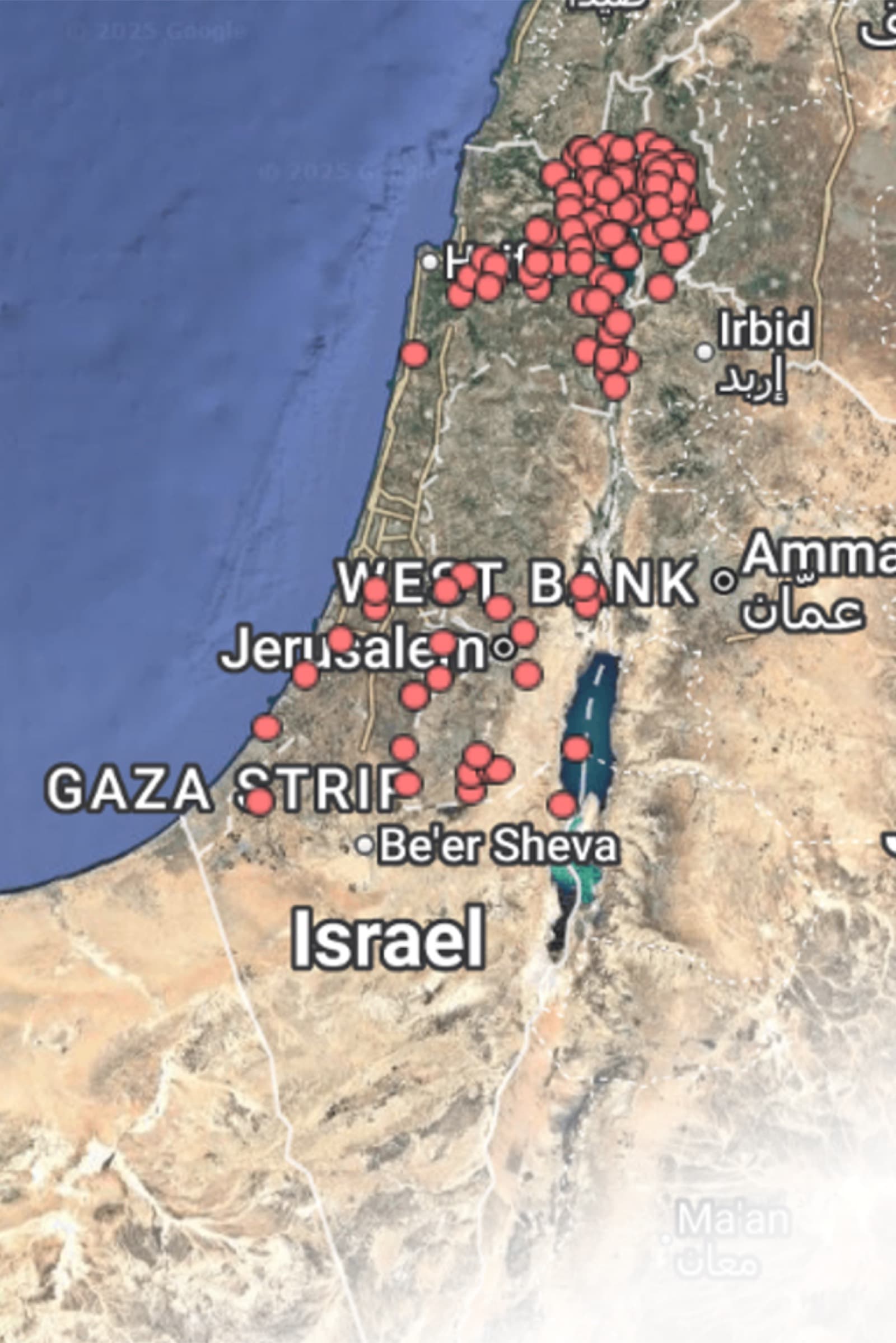
More than 130 ancient synagogues have been found in the Land of Israel — over half in the north. This campaign funds conservation at Bar'am, Korazim, Arbel, and Yehudiya.
A shared heritage in Israel’s parks
Ancient synagogues across the Land of Israel stand as testimony to Jewish communities that prayed, learned, and gathered here for centuries. Their architecture, mosaics, and inscriptions are the record of that life. More than 130 have been discovered; over half are in the north.
Many of these buildings have suffered from weather, visitors, and years without enough conservation. The Israel Nature and Heritage Foundation and the Israel Antiquities Authority are working together to restore and protect them. American Friends of INHF Inc. raises U.S. support so that work can happen in the parks, with the Israel Nature and Parks Authority.
How a gift is used
A donation here is a grant from a U.S. public charity. It pays for documentation, stabilization, and skilled conservation — not for a replica. Reconstruction drawings you may see elsewhere are a proposed vision of how a building might be understood; they are not a photograph of a finished project.
This campaign focuses on four places: Bar'am, Korazim, Arbel, and Yehudiya. Other heritage in the same family of work includes mosaics such as Hamat Tiberias, whose floor is among the earliest of its kind found in Israel.
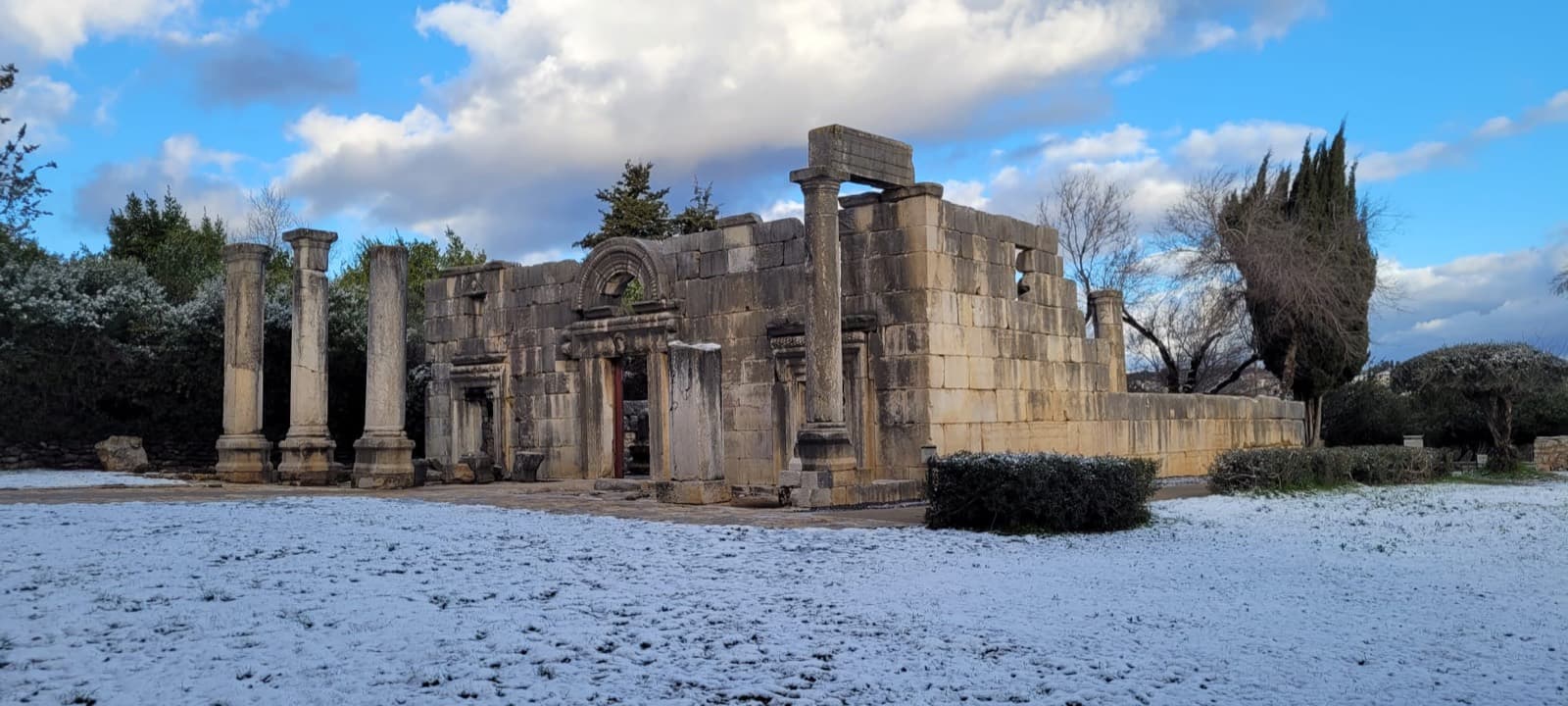
Bar'am National Park
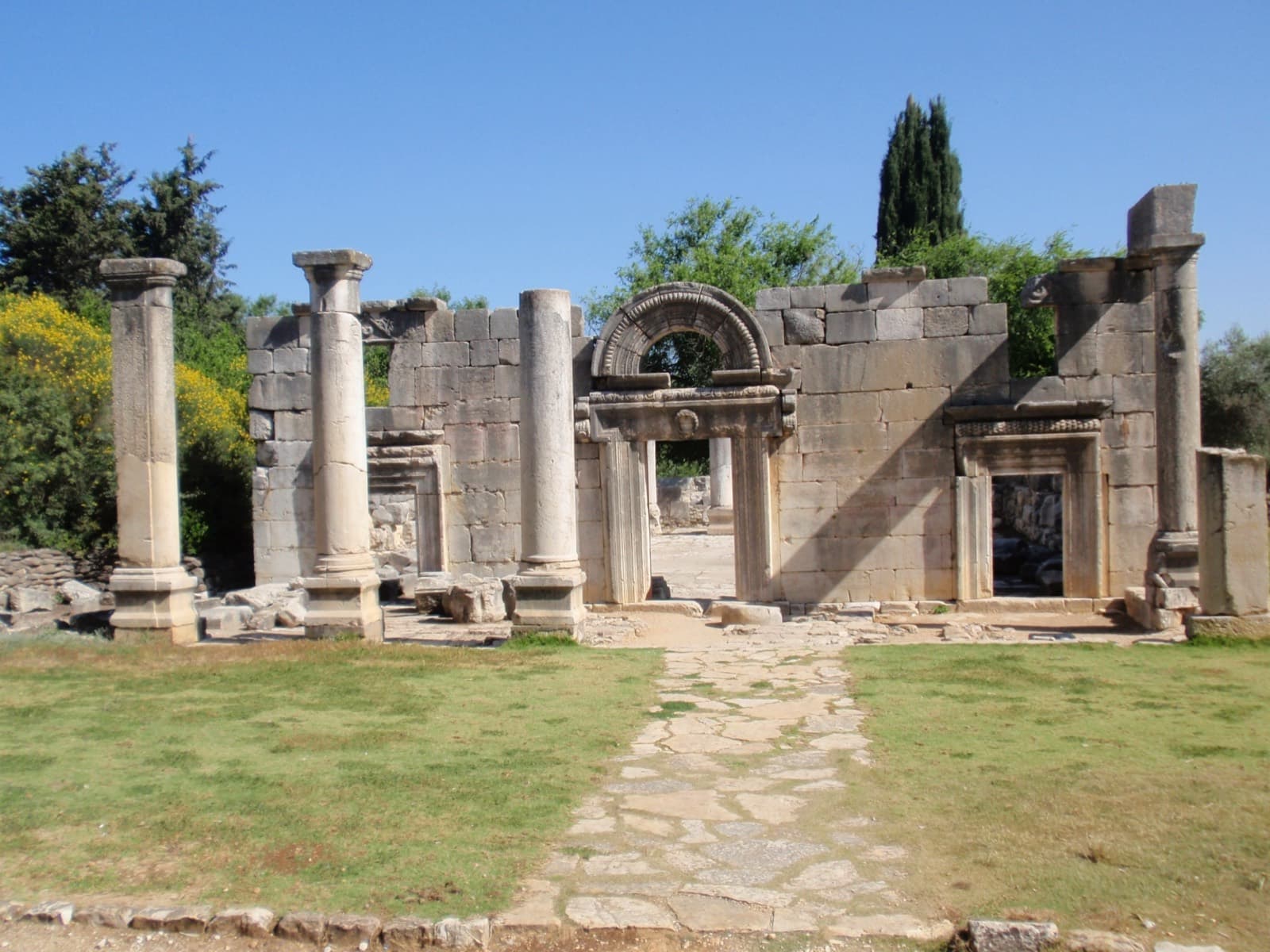
On a hill in the Upper Galilee, the ancient synagogue at Bar'am still turns toward Jerusalem. Built of local stone and known for its nearly intact facade, it is one of the most complete synagogue remains in Israel — a place where architecture, faith, and landscape meet.
Time, weather, and visitors wear the fabric down. Conservation here is documentation and careful stonework: photogrammetry, modeling of architectural pieces, and the slow craft of keeping the building standing without turning it into a replica.
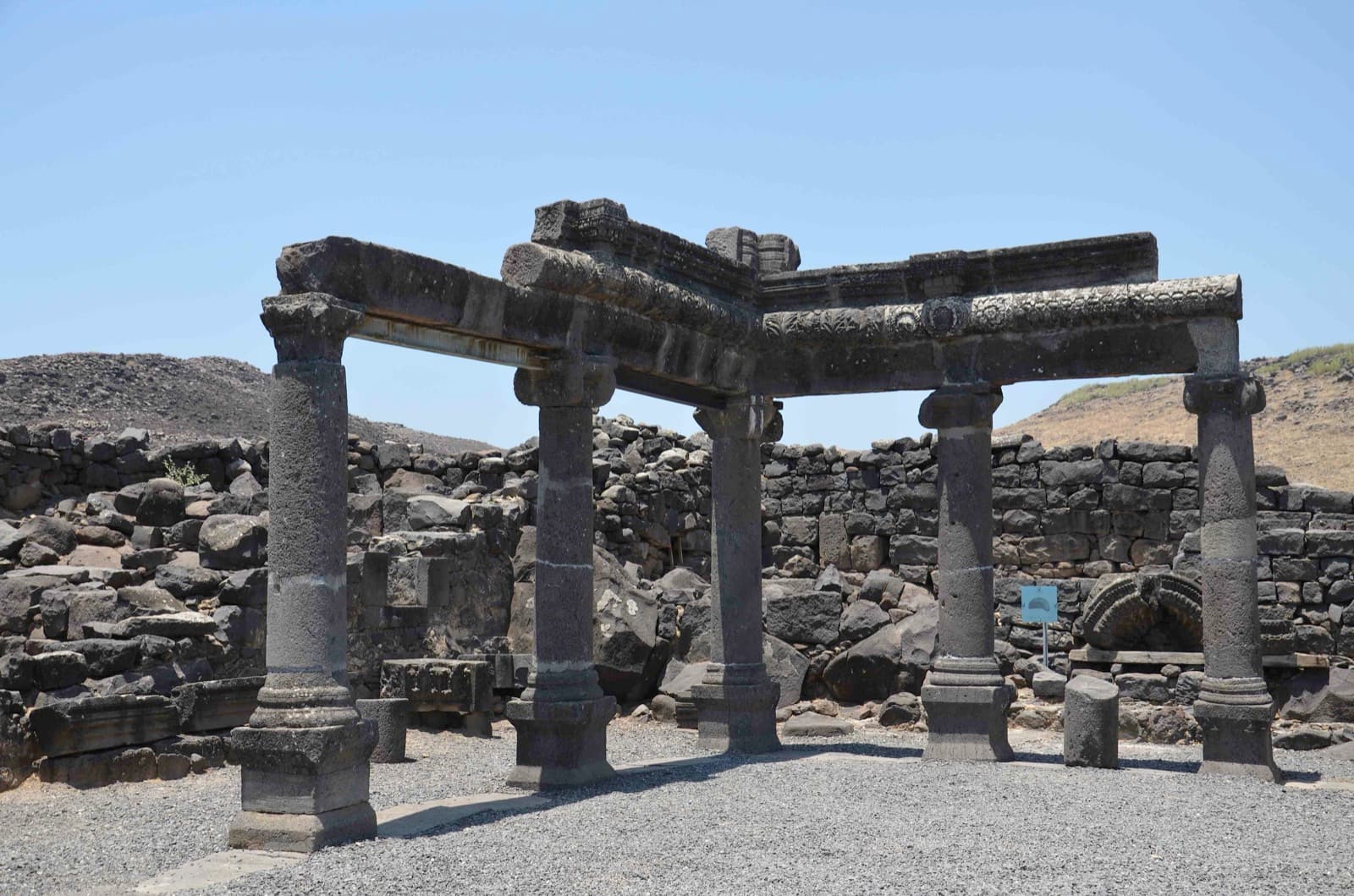
Korazim National Park
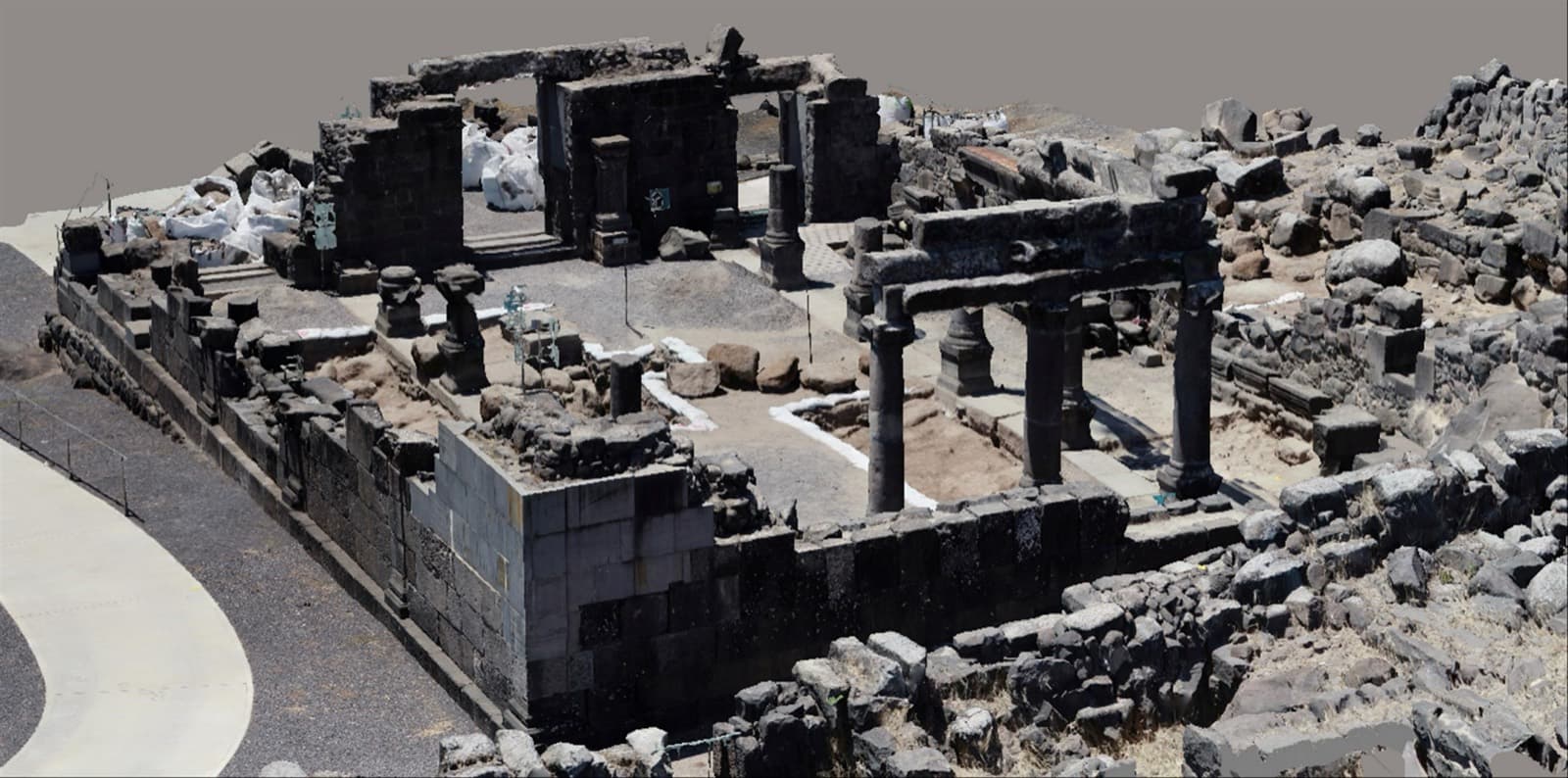
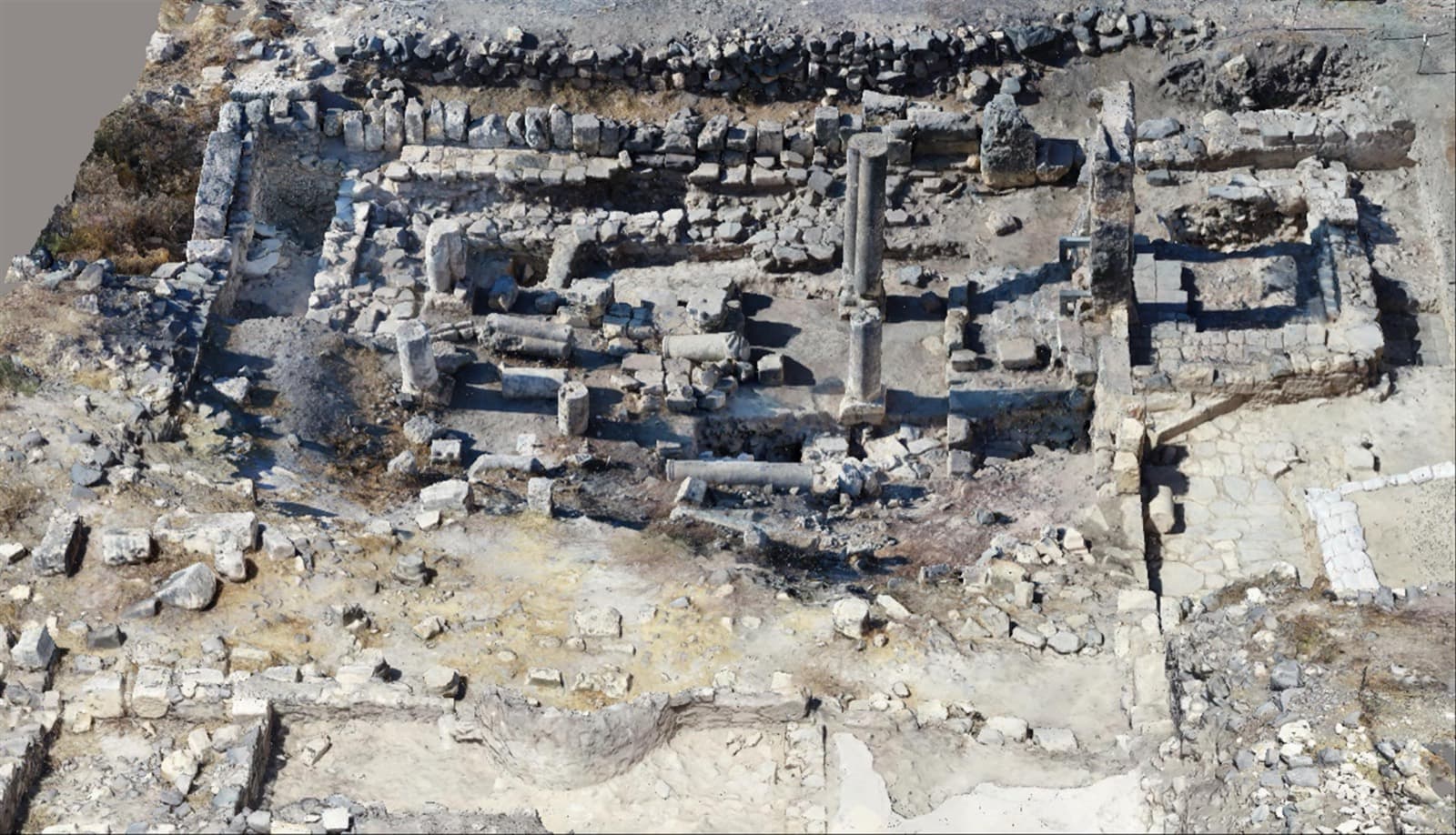
Korazim’s synagogue is built of dark basalt. What visitors see today is a standing ruin after years of exposure — columns, carved lintels, and a hall that still reads as a house of prayer.
Before further conservation, the site was excavated and recorded. Drawings of a fuller reconstruction exist, including an updated 2026 proposal. Those images are a proposed vision for how the building might be understood, not a photograph of work already finished.
Arbel National Park
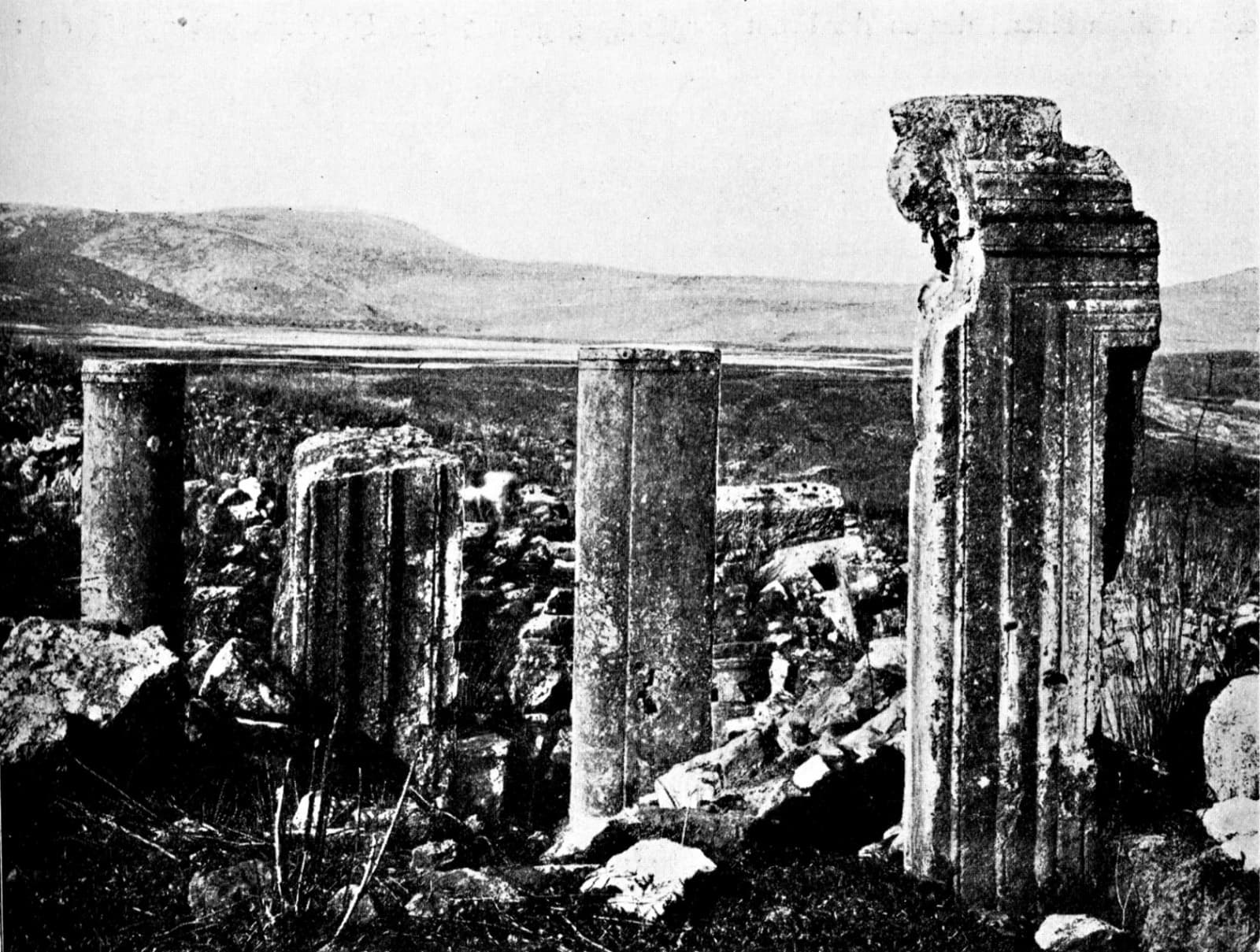
The synagogue at Arbel sits in a landscape of cliffs and ancient settlement. Much of the hall is a ruin: fallen columns, wall lines, and a gate that has been drawn, photographed, and partly conserved over more than a century.
A Palestine Exploration Fund drawing from 1866 already showed the gate and columns. Photographs from 2011 and conservation in 2019 record later work on that gate. New reconstruction drawings are, again, a proposed reading of the building — labeled as vision, not as a completed restoration.
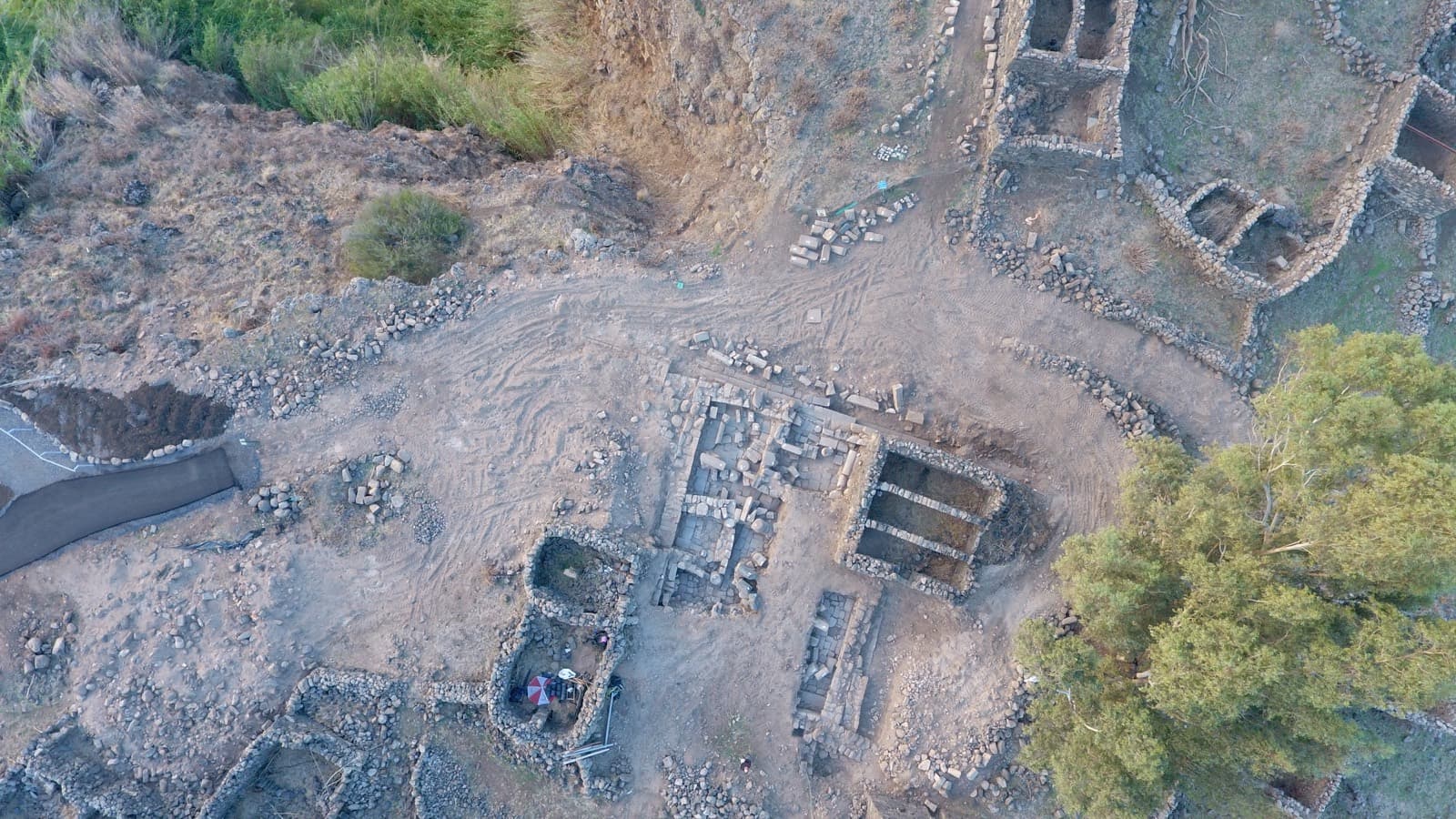
Photo: Dr. Mechael Osband. All rights reserved.
Yehudiya Nature Reserve
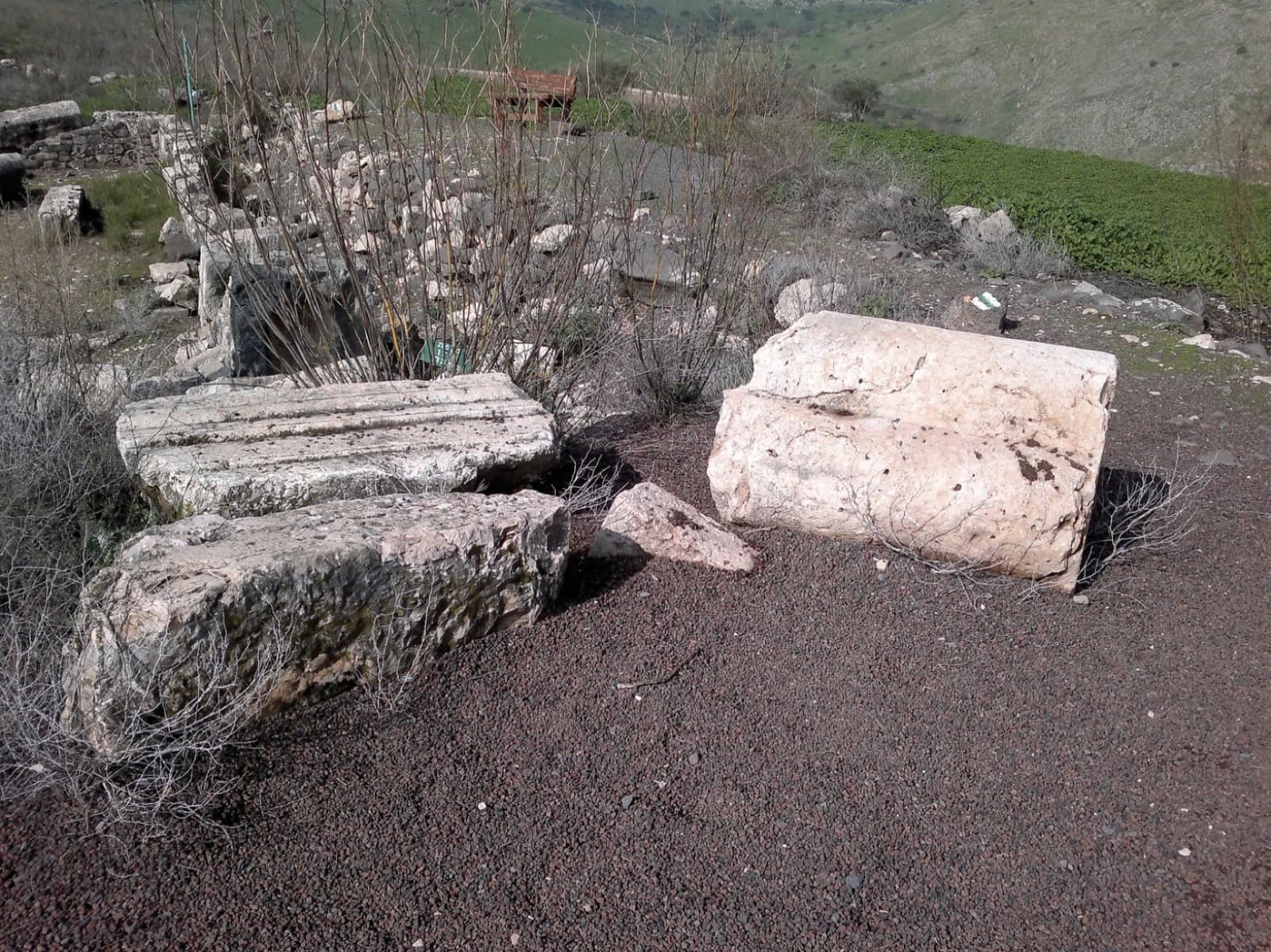
Yehudiya is the newest site in this campaign: a synagogue identified in survey and excavation in the Golan nature reserve. The building is about 13 by 18 meters, with three entrances on the southern side, two rows of columns, and benches along the walls — a familiar Galilean plan, newly brought to light.
Stones from the facade and Torah ark have already been found. This is early-stage heritage work: record what is there, protect it, and keep the story readable before the next season of weather and visitors.